Integrate Microsoft Environments Without Carrying Forward the Risk
For Mergers Acquisitions and Divestitures, Microsoft environments can quickly expose tenant complexity, identity gaps, Azure sprawl, and security blind spots.
Horizons helps enterprise IT teams understand what they are inheriting, secure what matters first, and build a cleaner Microsoft foundation across Entra ID, Active Directory, Azure, Microsoft 365, endpoints, and cloud security.
Built for the Microsoft Workstreams That
Decide Integration Success
M&A integration touches almost every part of the Microsoft environment. Horizons helps enterprise teams focus on the workstreams that carry the most operational and security risk.
Identity First
Bring control to Microsoft Entra ID, Active Directory, privileged access, MFA, Conditional Access, guest users, and identity lifecycle gaps before they become part of the future-state environment.
Azure Under Control
Review inherited Azure subscriptions, landing zones, policies, networking, backup, monitoring, cost visibility, and ownership so cloud sprawl does not become the new normal.
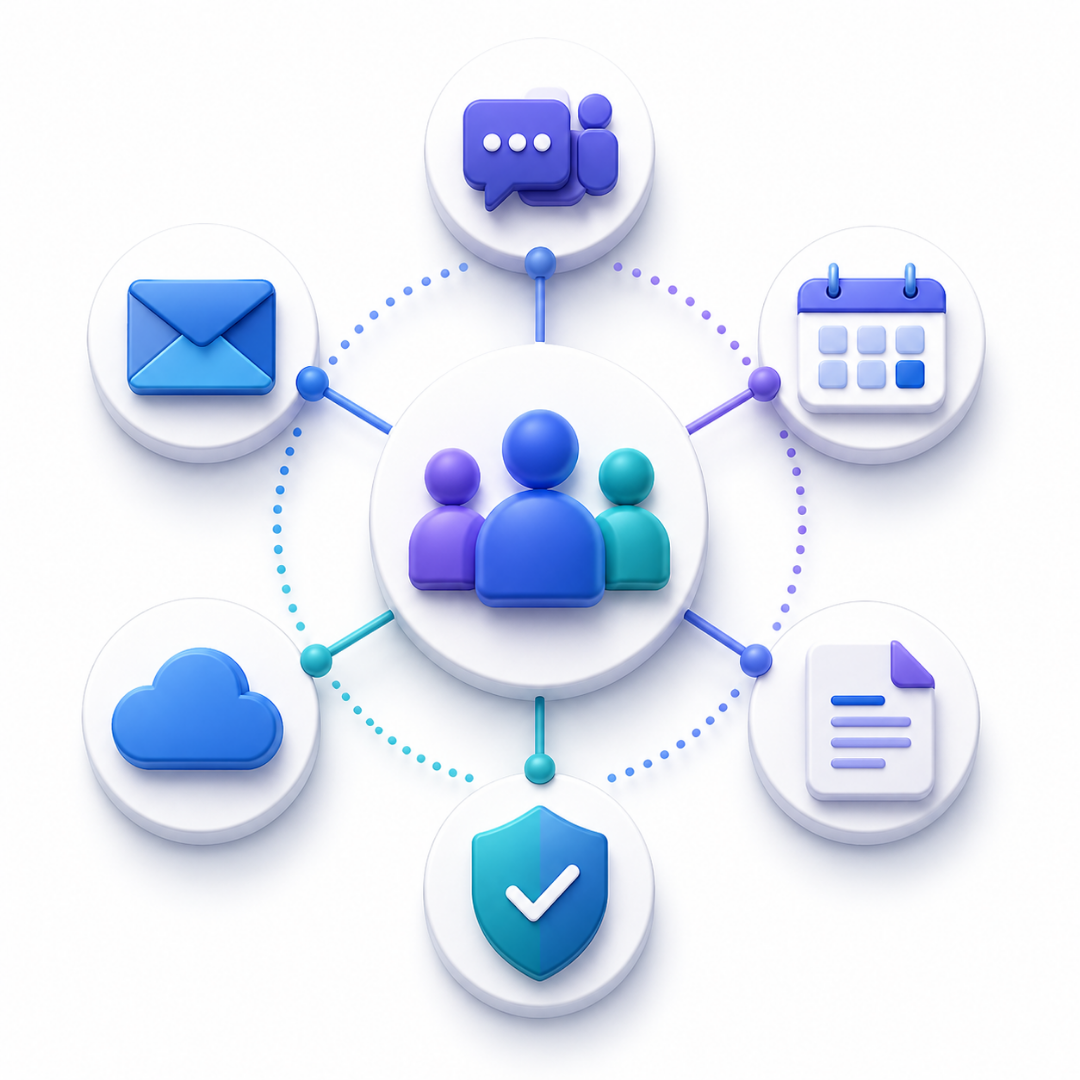
Collaboration Without Chaos
Support secure collaboration across Teams, Exchange, SharePoint, OneDrive, calendars, and Microsoft 365 while access, sharing, and data controls are reviewed.
Security During Transition
Improve visibility across Defender, Sentinel, Purview, endpoint security, identity protection, cloud posture, and Zero Trust controls during the most sensitive stage of integration.
The Deal May Be Complete The Environment Is Not
An acquisition does not create one clean technology environment overnight.
It creates a decision point.
Inherited technology risk often hides in places that look normal from the outside.
- What should be trusted?
- What needs to be secured first?
- What can coexist temporarily?
- What should be consolidated?
- What should be retired instead of migrated?
- A user account still works.
- A legacy application still authenticates.
- A SharePoint site still opens.
- An Azure subscription still runs.
- A device still connects.
- An admin account still has access.
A user account still works. A legacy application still authenticates. A SharePoint site still opens. An Azure subscription still runs. A device still connects. An admin account still has access.
That does not mean the environment is safe, governed, or ready to become part of the combined business. Horizons helps enterprise IT teams find these blind spots before inherited complexity becomes permanent.
M&A Integration Is Not Just Migration
Migration is movement. Integration is judgment.
A migration moves mailboxes, files, users, applications, or workloads from one place to another. But M&A integration decides what should move, what should stay, what should be secured first, what should be redesigned, and what should never be carried forward.
That difference is important.
When teams treat an acquisition like a simple migration, they can unintentionally move old risk into the new environment:
What gets carried forward without a plan?
- Stale users remain active
- Privileged accounts stay overexposed
- Legacy Active Directory issues follow the business
- Over-permissioned files remain open
- Azure subscriptions continue without governance
- Devices stay outside compliance standards
- Microsoft 365 sharing grows without control
- Security teams lose visibility across environments
- Copilot readiness gets delayed by access and data issues
Which identities can be trusted?
Review users, roles, groups, admins, guest access, and lifecycle gaps before connecting environments.
Which workloads matter most?
Identify business-critical Azure workloads, Microsoft 365 sites, applications, and dependencies early.
What should never move as-is?
Separate what should be consolidated, modernized, retired, isolated, or temporarily bridged.
As a trusted Microsoft partner, we help answer those questions before decisions become harder and more expensive to reverse.
Results-Driven Microsoft M&A Integration Services
Horizons supports enterprise teams through the Microsoft workstreams that matter most during mergers, acquisitions, divestitures, and carve-outs.
M&A Technology Readiness & Due Diligence
Horizons supports enterprise teams through the Microsoft areas that matter most during mergers, acquisitions, divestitures, and carve-outs.
Horizons reviews the Microsoft environment across identity, Azure, Microsoft 365, endpoints, security, licensing, infrastructure, and operational dependencies. This helps leadership and IT teams understand where risk exists, what may disrupt integration, and what needs attention early.
Key areas we review:
- Microsoft tenant structure
- Entra ID and Active Directory health
- Privileged access and admin roles
- MFA and Conditional Access coverage
- Azure subscriptions and governance
- Microsoft 365 security and sharing settings
- Endpoint and device management
- Defender, Sentinel, and Purview coverage
- Licensing and cloud cost complexity
- Legacy infrastructure dependencies
Tenant, Identity & Access Integration
Identity is the first layer of control in any Microsoft M&A project.
Horizons helps organizations understand and align Microsoft Entra ID, Active Directory, hybrid identity, user lifecycle, privileged access, Conditional Access, MFA, guest access, and cross-tenant collaboration.
The goal is not simply to connect users.
The goal is to build an identity foundation the combined organization can trust.
Key areas we Support:
- Microsoft tenant strategy
- Entra ID assessment
- Active Directory forest review
- Hybrid identity planning
- Cross-tenant access planning
- Privileged access cleanup
- MFA and Conditional Access alignment
- Guest user governance
- Group and role rationalization
- Identity lifecycle controls
Azure & Infrastructure Integration
Acquired infrastructure should not be absorbed without structure.
Horizons helps enterprise teams bring inherited Azure environments, hybrid infrastructure, workloads, and governance models under control. We help identify what is business-critical, what is unmanaged, what is duplicated, and what needs a better operating model.
This is where M&A becomes a cloud governance opportunity.
Key areas we Sopport:
- Azure subscription review
- Management group alignment
- Azure landing zone planning
- Azure Policy implementation
- Network and connectivity review
- Resource ownership mapping
- Backup and disaster recovery review
- Azure Monitor and logging
- Cost visibility and optimization
- Hybrid infrastructure modernization
Microsoft 365 & Security Integration
After a deal closes, users need to work together quickly. But collaboration should not move faster than control.
Horizons helps stabilize Microsoft 365 collaboration while aligning security, endpoint management, data protection, and monitoring. This helps teams stay productive while IT reduces long-term risk.
Key areas we support:
- Teams collaboration planning
- Exchange and email continuity
- SharePoint and OneDrive access review
- External sharing controls
- Microsoft 365 Groups review
- Guest access governance
- Intune endpoint management
- Defender security alignment
- Sentinel monitoring
- Purview data protection
- Copilot readiness cleanup
A Repeatable Integration Model for Microsoft Environments.
Every deal is different, but the Microsoft integration questions are often familiar.
Horizons helps enterprise teams follow a repeatable model that brings structure to the uncertainty.
01
See the Environment Clearly
Map tenants, identities, Active Directory, Azure subscriptions, Microsoft 365, endpoints, security tools, data controls, legacy systems, and business-critical workloads.
02
Secure the Access Layer
Prioritize privileged accounts, stale users, guest access, Conditional Access, MFA, service accounts, admin roles, legacy AD risk, and identity lifecycle gaps.
03
Stabilize Day 1 Collaboration
Support secure collaboration across Teams, Exchange, SharePoint, OneDrive, calendars, critical applications, and executive access without opening unnecessary risk.
04
Bring Azure Into Governance
Align Azure subscriptions, management groups, landing zones, policies, monitoring, networking, backup, security baselines, and cost visibility.
05
Decide What Moves Forward
Choose what should be consolidated, coexist temporarily, modernized, retired, or kept separate for business or compliance reasons.
Where M&A Risk Usually Hides
The most serious integration risks are not always obvious. They often sit inside systems that appear to be working.
Legacy Active Directory
Old forests, stale trusts, nested groups, service accounts, unmanaged privileged access, and outdated authentication patterns can create inherited identity risk.
We helps assess Active Directory before those risks become part of the merged environment.
Privileged Access
Admin roles are often duplicated, undocumented, or over-permissioned after a deal.
We helps review privileged access across Entra ID, Active Directory, Azure, Microsoft 365, and critical systems so high-risk access can be reduced early.
Overexposed Microsoft 365 Content
SharePoint, OneDrive, Teams, and Microsoft 365 Groups can contain sensitive information with access that no longer matches the business.
We helps review sharing, ownership, guest access, group permissions, and data protection controls.
Azure Subscription Sprawl
Inherited Azure subscriptions may lack consistent naming, tagging, monitoring, security, backup, policy, or cost controls.
We helps create a governed Azure model that supports visibility, ownership, and scale.
Unmanaged Endpoints
A merger can introduce devices that do not meet the acquiring company’s standards for compliance, encryption, endpoint protection, or patching.
We helps align devices through Intune, Autopilot, compliance policies, and endpoint security baselines.
Security Monitoring Gaps
Before integration, each company may have different monitoring tools and response processes.
We helps improve visibility across Microsoft Defender, Sentinel, Purview, Entra ID, endpoints, and cloud security controls.
Microsoft Systems We Help Bring Under Control
For mergers acquisitions and divestitures, the most important Microsoft systems are connected.
Identity affects security. Security affects collaboration. Collaboration affects data. Data affects Copilot readiness. Azure governance affects cost, resilience, and control.
Horizons helps connect these workstreams instead of treating them as separate projects.
Identity
- Microsoft Entra ID
- Active Directory
- Entra Connect
- Conditional Access
- Multi-factor Authentication
- Privileged Identity Management
- Cross-tenant Access
- Hybrid Identity
Cloud Infrastructure
- Microsoft Azure
- Azure Subscriptions
- Azure Landing Zones
- Azure Policy
- Azure Arc
- Azure Backup
- Azure Monitor
- Azure Networking
Modern Workplace
- Microsoft 365
- Microsoft Teams
- Exchange Online
- SharePoint Online
- OneDrive
- Microsoft 365 Groups
- Collaboration Governance
- External Sharing Controls
Security and Compliance
- Microsoft Defender XDR
- Microsoft Defender for Cloud
- Microsoft Sentinel
- Microsoft Purview
- Endpoint Security
- Identity Protection
- Zero Trust Controls
- Cloud Security Posture Management
Endpoint Management
- Microsoft Intune
- Windows Autopilot
- Device Compliance Policies
- Configuration Profiles
- Co-management
- Endpoint Security Baselines
- Application Deployment
- Remote Device Management
AI Readiness
- Microsoft Copilot Readiness
- Data Access Review
- Oversharing Cleanup
- Microsoft 365 Governance
- Identity and Permission Review
- Security Baseline Alignment
- AI-Ready Cloud Infrastructure
AI Readiness Starts With Integration Hygiene
AI does not fix a messy environment. It exposes it.
After a merger or acquisition, Copilot readiness depends on the same areas that make integration difficult: identity, permissions, Microsoft 365 content, data protection, and governance.
If files are overshared, groups are outdated, guest access is uncontrolled, or sensitive data is poorly labeled, Copilot can surface risks that were already present.
Horizons helps clean up the Microsoft foundation before AI expands what users can discover.
That may include:
- Reviewing SharePoint and OneDrive exposure
- Cleaning up identity and group permissions
- Aligning Purview and data protection policies
- Reviewing guest access and external sharing
- Strengthening Microsoft 365 governance
- Improving security baselines
- Preparing the environment for safer Copilot adoption
What Should Happen Before, During, and After the Deal
A strong integration plan creates the right sequence. Not everything belongs on Day 1.
Not everything should wait until the future state. Not everything should move.
Before Close: Know the Risk
Before the deal closes, the priority is visibility.
Horizons helps assess what the acquiring company may inherit across identity, tenants, Azure, Microsoft 365, endpoints, security controls, licensing, legacy systems, and business-critical dependencies.
Outcome:
A clearer view of inherited Microsoft risk before it becomes operational responsibility.
Day 1: Keep the Business Working
Day 1 is about continuity and control.
Employees need to communicate. Leaders need access. Critical systems need to work. Support teams need escalation paths. Security teams need visibility.
But Day 1 should not become an excuse to open access everywhere.
Outcome:
The business keeps moving without creating avoidable access and security exposure.
First 100 Days: Remove the Blind Spots
Once the business is stable, the focus shifts to cleanup and control.
This is where identity, permissions, cloud governance, endpoint management, Microsoft 365 security, and monitoring need structured attention.
Outcome:
The combined Microsoft environment becomes easier to secure, manage, and support.
Future State: Stop Carrying the Past Forward
Long-term integration is where organizations decide what the future should look like.
This may include tenant consolidation, Azure modernization, legacy infrastructure retirement, endpoint standardization, Zero Trust maturity, Microsoft 365 governance, and Copilot readiness.
Outcome:
A cleaner Microsoft environment that supports scale, security, and future transformation.
Why Enterprise Teams Bring Horizons Into M&A Integration
M&A integration creates pressure from every direction. The business wants speed. Security wants control. IT wants visibility. Employees want access. Leadership wants progress.
We Start With Control, Not Migration
A rushed migration can move today’s risk into tomorrow’s environment.
We helps identify what should be secured, redesigned, retired, or governed before it becomes part of the future-state model.
We Understand Microsoft Complexity at Enterprise Scale
Microsoft M&A work touches Entra ID, Active Directory, Azure, Microsoft 365, Intune, Defender, Sentinel, Purview, endpoints, and legacy infrastructure.
We helps connect these areas into one practical integration path.
We Balance Day 1 Pressure With Long-Term Architecture
The business needs access now.
IT needs control for the future.
We helps support both by separating immediate continuity needs from long-term integration decisions.
We Treat Azure Governance as a Post-Deal Priority
Acquired Azure subscriptions can quietly become permanent cloud sprawl.
We helps establish ownership, policy, cost visibility, monitoring, backup, security baselines, and landing zone alignment early in the process.
We Build Toward AI-Ready Operations
Copilot readiness is not a switch.
It depends on identity, access, data governance, Microsoft 365 structure, and security maturity.
We helps clean up the Microsoft foundation before AI expands what users can discover.
What a Cleaner Integration Makes Possible
A strong integration does more than combine systems. It gives the business a better foundation than either environment had on its own.
The goal is not just to finish the project. The goal is to avoid making inherited complexity the new normal.
- Clearer visibility into inherited Microsoft risk
- Cleaner identity and access control
- Reduced privileged access exposure
- Safer collaboration across merged teams
- Better Azure governance and cost visibility
- Stronger Microsoft 365 security and sharing controls
- More consistent endpoint management
- Better security monitoring and response
- Fewer legacy systems carried forward by default
- A more realistic tenant consolidation roadmap
- Stronger readiness for Microsoft Copilot and AI
- Less disruption during post-merger integration
The goal is not just to finish the project.
The goal is to avoid making inherited complexity the new normal.
Explore Focused M&A Integration Services
Use this page as the starting point for your Microsoft M&A planning. Then explore the service area that matches your current challenge.
M&A Technology Readiness & Due Diligence
Understand the Microsoft risks, dependencies, and integration effort before major decisions are made.
Best for organizations preparing for a deal or trying to understand what they have inherited.
Microsoft Tenant, Identity & Access Integration
Secure users, permissions, tenants, Active Directory, and Entra ID across the combined organization.
Best for organizations dealing with duplicate identities, multiple tenants, privileged access concerns, guest access growth, or hybrid identity complexity.
Post-Merger Microsoft 365 & Security Integration
Keep teams productive while aligning collaboration, endpoint management, Microsoft 365 security, Defender, Sentinel, and data protection.
Best for organizations that need to stabilize users, devices, collaboration, and security after the deal closes.
Azure & Infrastructure Integration After M&A
Bring inherited infrastructure, Azure subscriptions, policies, networking, workloads, and governance under control.
Best for organizations that need to reduce cloud sprawl, align Azure operations, and modernize inherited infrastructure.
Start With the Environment You Are Actually Inheriting
Every acquisition creates pressure to move quickly. But speed without visibility can carry old risk into the new organization.
We help uncover risk, secure access, stabilize collaboration, bring Azure under governance, and build a Microsoft foundation that is easier to manage after the deal.
Because the best integration is not always the fastest one. It is the one that gives the business control.