Enterprise Automation at Scale: Building Intelligent Workflows with Azure Agentic AI
Retrieval-Augmented Generation (RAG) marked a significant breakthrough in enterprise AI, allowing teams to quickly surface insights and answer questions. This led to the rapid adoption of copilots and chatbots that streamlined support and reduced information search time.
However, answers alone rarely drive real business impact. Most enterprise workflows require action: updating records, submitting forms, or orchestrating multi-step processes across disparate systems. Traditional automation tools often struggle with change and scale, resulting in gaps and inefficiencies.
This is where agentic AI emerges as a true game-changer. Instead of merely delivering information, agents are designed to reason, act, and collaborate, effectively bridging the gap between knowledge and measurable outcomes. Agents, combined with Copilot and human ambition, deliver real AI differentiation. Whether through prebuilt frameworks like Sales Agent, general purpose reasoning agents like Researcher and Analyst, or custom agents built in Microsoft Copilot Studio, agents are unlocking massive value for businesses.
Table of Contents
- Azure AI Foundry: The Enterprise Platform
- Key Capabilities of Azure AI Foundry
- Foundational Agent Design Patterns
- Customer Transformation with Azure Agentic AI
- Conclusion
- Key Takeaways
Azure AI Foundry: The Unified Platform for Azure Agentic AI
The journey from a promising agent demo to a reliable, real-world enterprise implementation is fraught with challenges. Teams must figure out how to chain multiple steps reliably, securely grant agents access to sensitive business data, monitor agent behavior, ensure identity, and scale solutions. Building custom scaffolding for orchestration, security, and logging slows down the time-to-value and often leads to fragile solutions.
Azure AI Foundry is the cohesive, end-to-end platform built specifically to meet these demands. It is designed from the ground up for the new era of agentic automation, combining rapid innovation with robust, enterprise-grade controls.
Key Capabilities of Azure AI Foundry
Enterprise Security and Identity
Every agent deployed receives a managed Entra Agent ID, supported by robust Role-based Access Control (RBAC), On Behalf Of authentication, and policy enforcement. This ensures that only authorized agents access the correct resources.
Flexible Model Choice
Teams can choose from a vast catalog, including Azure OpenAI, xAI Grok, Mistral, Meta, and over 10,000 open-source models, all accessible via a unified API. The platform uses a Model Router and Leaderboard to help select the optimal model based on performance, cost, and specialization.
Instant Integration (Tool Use)
Azure AI Foundry allows instant integration with enterprise systems using over 1,400+ built-in connectors for SharePoint, Bing, SaaS, and business applications, all with native security support.
Seamless Scaling
Developers can prototype and test agents locally, then seamlessly move to cloud runtime without requiring code rewrites, enabled by the Azure AI Foundry SDK.
Comprehensive Observability
The platform provides deep visibility with step-level tracing, automated evaluation, and integration with Azure Monitor, supporting compliance and continuous improvement at scale.
Azure AI Foundry is more than just a toolkit; it is the essential foundation for orchestrating secure, scalable, and intelligent agents across the modern enterprise.
Foundational Agent Design Patterns
While moving from retrieval to action starts with agents using tools, reliable automation demands agents that can reflect, plan, and adapt. The five foundational patterns below are often combined to unlock transformative automation:
Tool Use Pattern (From Advisor to Operator)
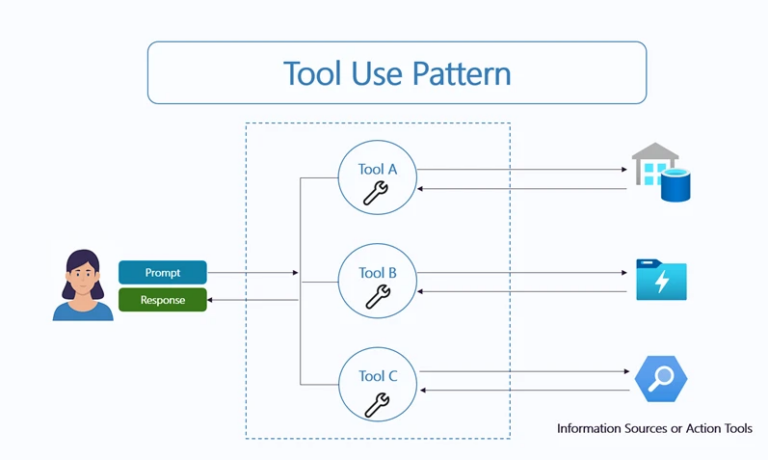
This pattern allows agents to interact directly with enterprise systems by calling APIs, executing transactions, or triggering workflows. Instead of just answering questions, agents complete tasks and orchestrate workflows end-to-end. For instance, Fujitsu used specialized agents invoking specific APIs for sales proposal analysis and document creation, reducing production time by 67%.
Reflection Pattern (Self-Improvement)
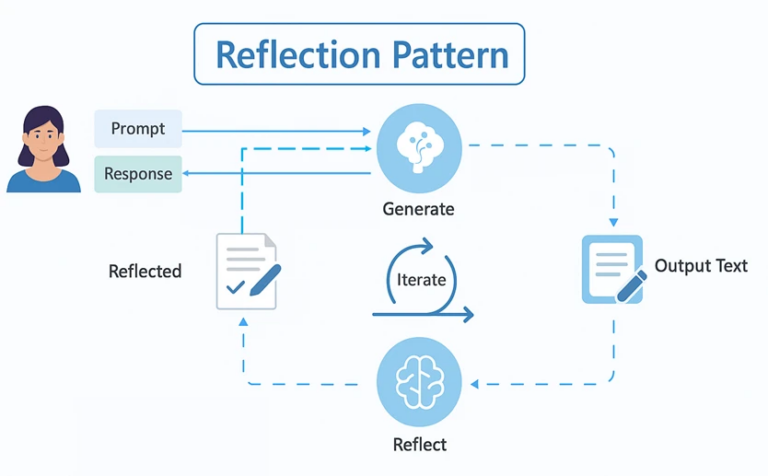
Agents assess and improve their own outputs, allowing them to catch errors and iterate for quality without constant human dependence. This self-improving loop is critical in high-stakes fields like finance or compliance, where agents can auto-correct missing details or double-check calculations to ensure auditable processes.
Planning Pattern (Decomposing Complexity)
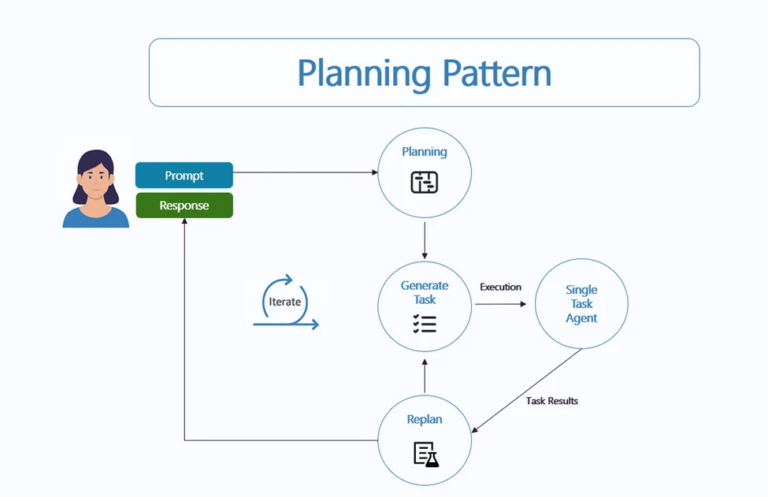
Real business processes are often complex, multi-step journeys. Planning agents break high-level goals into actionable tasks, track progress, and adapt to shifting requirements. ContraForce’s security agents, for example, use planning to break down incidents into intake, impact assessment, and execution, automating 80% of incident investigation and response.
Multi-Agent Pattern (Collaboration)
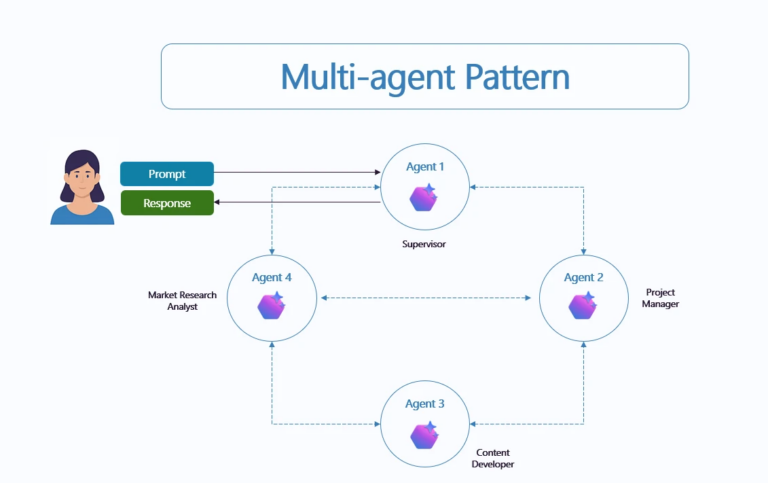
This mirrors human teams by connecting specialized agents, each focusing on a different workflow stage, under an orchestrator. This modular design facilitates agility and scalability. Orchestration can be sequential (agents refining a document step-by-step), concurrent (running tasks in parallel), or group chat/maker-checker (agents debating validation). JM Family utilized this approach with its BAQA Genie, deploying coordinated agents that cut requirements and test design from weeks to days.
ReAct (Reason + Act) Pattern (Adaptive Problem Solving)
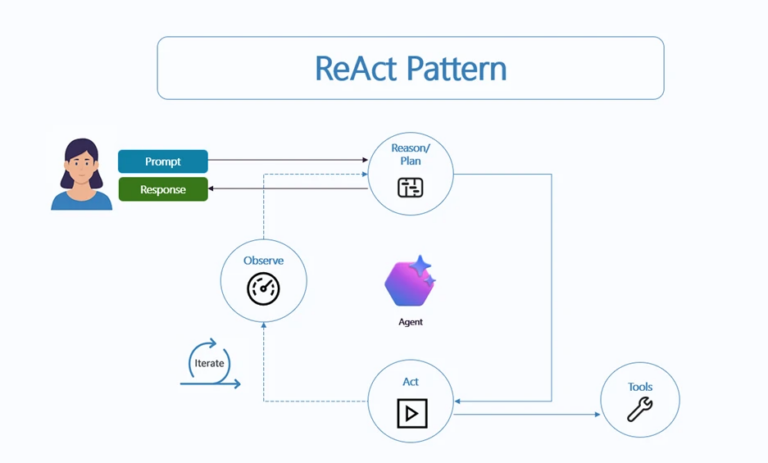
The ReAct pattern enables agents to solve problems in real time when static plans fail. ReAct agents alternate between reasoning and action, taking a step, observing results, and deciding the next action. This allows for adaptive diagnosis, such as a virtual IT agent asking clarifying questions and checking system logs, and escalating complex issues to a human specialist with a detailed summary.
Customer Transformation with Azure Agentic AI
Organizations are leveraging Azure Agentic AI solutions (built using Azure AI Foundry, Copilot Studio, and Power Platform) to achieve AI-first differentiation and realize significant value.
Service Delivery Automation
Agentic service management provider Atomicwork leveraged Azure AI Foundry to create Atom, an agent that automates service delivery, resulting in reduced operational costs and increased employee satisfaction. One customer achieved a 65% deflection rate within six months.
Cost Savings and Accuracy
Dow built an autonomous Freight Agent in Copilot Studio to scan over 100,000 shipping invoices annually for billing inaccuracies. By solving hidden losses autonomously within minutes, Dow expects to save millions of dollars through increased accuracy in logistic rates and billing within the first year.
Compliance and Risk Reduction
KPMG’s Comply AI agent, utilizing Microsoft AI technologies, helps identify ESG compliance, resulting in one customer achieving a 70% improvement in Controls and Risks descriptions and an 18-month reduction in compliance program timelines.
Employee Productivity
Wells Fargo built an agent through Teams that provides instant guidance on 1,700 internal procedures across 4,000 bank branches. This reduced employee response times from 10 minutes to 30 seconds, with 75% of searches now happening through the agent.
Customer Experience Scale
Eneco developed a multilingual agent using Copilot Studio that manages 24,000 chats per month (a 140% increase) and resolves 70% more customer conversations without requiring a handoff to a live representative.
Conclusion
The introduction of azure agentic ai marks a fundamental shift in how businesses approach automation, moving from fragile scripts to intelligent, scalable systems. Whether through leveraging Microsoft 365 Copilot Chat, building custom agents via Copilot Studio, or deploying sophisticated agents on Azure AI Foundry, the future is centered on AI that reasons and acts.
Azure AI Foundry is the crucial foundation for orchestrating these secure, scalable, and interoperable agents across the modern enterprise. By empowering agents to bridge the gap between knowledge and action, organizations can unlock continued AI opportunity, drive pragmatic innovation, and realize meaningful business impact.
Key Takeaways
- Agents Drive Action: Agentic AI moves beyond RAG’s limitations (answers) to focus on enterprise workflows that demand action (updating records, submitting forms).
- Azure AI Foundry is Essential: Azure AI Foundry provides a unified, secure platform with capabilities like managed Entra Agent ID, RBAC, and comprehensive observability, solving the challenges of scaling agents from prototypes to production.
- Patterns Enable Robustness: Combining the five foundational patterns—Tool Use, Reflection, Planning, Multi-Agent, and ReAct—ensures agents are reliable, adaptive, and capable of handling complex, multi-step business processes.
- Tangible Business Impact: Customers are seeing quantifiable results, including Dow saving millions on logistics, KPMG reducing compliance timelines by 18 months, and Wells Fargo cutting employee response times from 10 minutes to 30 seconds.
Frequently Asked Questions
What is Azure Agentic AI?
Azure Agentic AI refers to Microsoft’s approach to building intelligent, autonomous agents that can reason, act, and collaborate across enterprise systems. Built on Azure AI Foundry, Copilot Studio, and Power Platform, it enables businesses to move beyond traditional automation and achieve intelligent, action-oriented workflows.
How does Azure Agentic AI differ from traditional AI or RAG models?
Traditional AI models and RAG (Retrieval-Augmented Generation) focus on providing answers and insights. In contrast, Azure Agentic AI goes a step further—it doesn’t just answer questions; it takes actions. These agents can update records, submit forms, and automate multi-step workflows securely and intelligently across Microsoft and enterprise systems.
What is Azure AI Foundry and how does it support Agentic AI?
Azure AI Foundry is Microsoft’s unified enterprise platform for developing, deploying, and managing agentic AI systems. It provides enterprise-grade security (via Entra Agent ID and RBAC), scalable infrastructure, model routing, observability, and integration with over 1,400+ connectors for tools like SharePoint, Dynamics 365, and Power BI—making it the backbone of Azure Agentic AI.
How can businesses get started with Azure Agentic AI?
Businesses can begin by assessing their automation needs, identifying key workflows for AI-driven transformation, and leveraging Azure AI Foundry or Copilot Studio to build agents. Engaging with Microsoft partners or AI solution providers helps design, deploy, and scale these agents securely and effectively.