Microsoft Cloud, Security & AI Insights
Clear answers to common questions about Azure, Microsoft 365, cloud security, Copilot readiness, identity, endpoint management, and enterprise IT modernization.
What should an AI readiness checklist include?
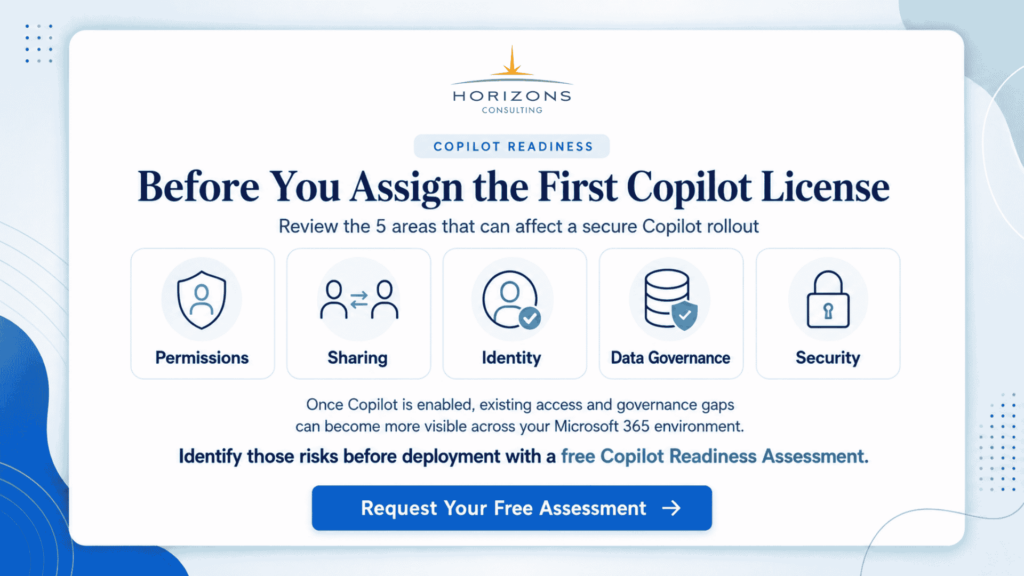
An AI readiness checklist should include the security, data, compliance, governance, and operational areas that need to be reviewed before AI adoption expands.
At a minimum, the checklist should cover identity and access controls. This includes multi-factor authentication, Conditional Access, privileged roles, stale accounts, guest users, service accounts, group memberships, and user lifecycle management.
It should also review data protection. Cybersecurity and compliance teams should check where sensitive data lives, who can access it, whether sharing links are too broad, whether external access is controlled, and whether sensitivity labels, DLP policies, and retention rules are in place.
A good AI readiness checklist should also include governance items. Organizations need clear rules for approved AI tools, restricted data, employee usage, human review, use case approval, and ownership. Without this, employees may use AI in ways that create privacy, compliance, or data exposure risks.
Compliance should also be part of the checklist. Teams should confirm whether AI use is aligned with privacy requirements, audit expectations, regulatory obligations, records management, and internal policies.
The checklist should not only identify risks. It should also help the organization assign owners, prioritize remediation, and decide what must be completed before AI or Microsoft 365 Copilot is rolled out more widely